
This year we have been trialling some cutting-edge bird monitoring techniques at Wild Whittington, our rewilding site in Chesterfield. Using some highly specialised technology and a bit of programming know-how, our pilot study has allowed us to track the activity and distribution of the resident birds, revealed the secrets of some elusive nocturnal migrants, and even captured a visit from a very special and highly endangered species- all with only a handful of short site visits.
What is acoustic monitoring?
As animal species go, birds are extremely loud. They live in a complex acoustic world, using highly sophisticated calls and songs to find mates, defend territories, keep tabs on each other in dense habitats, sound the alarm when predators are nearby and much, much more. Each species has a unique voice that, with a bit of practice, allows us to tell one bird from another, and this makes birds ideal candidates for passive audio monitoring. In order to discover more about Wild Whittington’s birds, we deployed a flock of clever little recording devices called SongMeters- autonomous microphones that can be set up to periodically capture audio at the times of day when birds are most active. After a week on site the SongMeters had amassed a huge quantity of sixty-second audio files, collectively containing a wealth of information about the secret lives of Wild Whittington’s most feathery residents.
You may be wondering how a dataset containing hundreds of ambiguously named audio clips that may or may not contain birdsong would be useful to us. Surely the hours required to trawl through such a huge dataset and individually label every recording would render it non-viable as a monitoring technique? You would be right, of course. This, however, is where a bit of computer wizardry comes in handy. At Cornell University’s Lab of Ornithology, some very clever people have trained a machine learning algorithm to identify birds from audio recordings. Known as BirdNet, this software is used all over the world; in addition to its frequent use in scientific monitoring studies, it is also the driving force behind Merlin, the popular birdsong ID app. In the interest of equitable access to science, the creators of BirdNet have released its source code under an open-source license which allows it to be used by all for educational and research purposes.
With a bit of home-grown Python code, we can instruct a computer to look through all of our SongMeter recordings one by one and ‘feed’ them to BirdNet, allowing us to process hundreds of files in a few minutes and significantly reducing the amount of manual checking that we need to do. All of the non-bird recordings are filtered out along with anything that BirdNet is unsure about, leaving us with only the most likely recordings to look through manually. The data tells us which birds have visited the site, how often they were calling, the times of day that they were most active, and which species were recorded most frequently by each SongMeter.
What have we discovered?
The very first deployment was a resounding success. After the data had been processed and checked through, a total of forty-six species were confirmed to have visited the site during the deployment, many of which are particularly threatened and of high-priority for conservation such as linnet, skylark and bullfinch. We determined from the data that thirty-three of these species are likely to be resident at the site, while the remaining thirteen were probably just passing through. The SongMeters captured the nocturnal flight calls of common sandpiper and oystercatcher as they travelled to new habitats, giving us an elusive insight into their flight paths across the county. Most exciting of all was an unmistakeable purring call, captured on the 5th of May at around 4:30am- a turtle dove had visited Wild Whittington.
The turtle dove is a seriously threatened species. They are migratory, nesting in Europe during the Spring and Summer and travelling all the way to West Africa every year to escape the Winter. Along their migration route they face heavy losses from hunting, and the few who make it back to Europe often return to find that their nesting sites have been destroyed. Their population has declined by a staggering 99% since 1960. However, there is a glimmer of hope for this charming species- turtle doves require dense scrub and tall, wild hedgerows for nesting, and it just so happens that these habitats are often among the first to re-establish when nature is left to its own devices. Breeding turtle doves are unquestionable proof of a successful rewilding site, and their fleeting appearance at Wild Whittington is a sure sign that things are moving in the right direction.
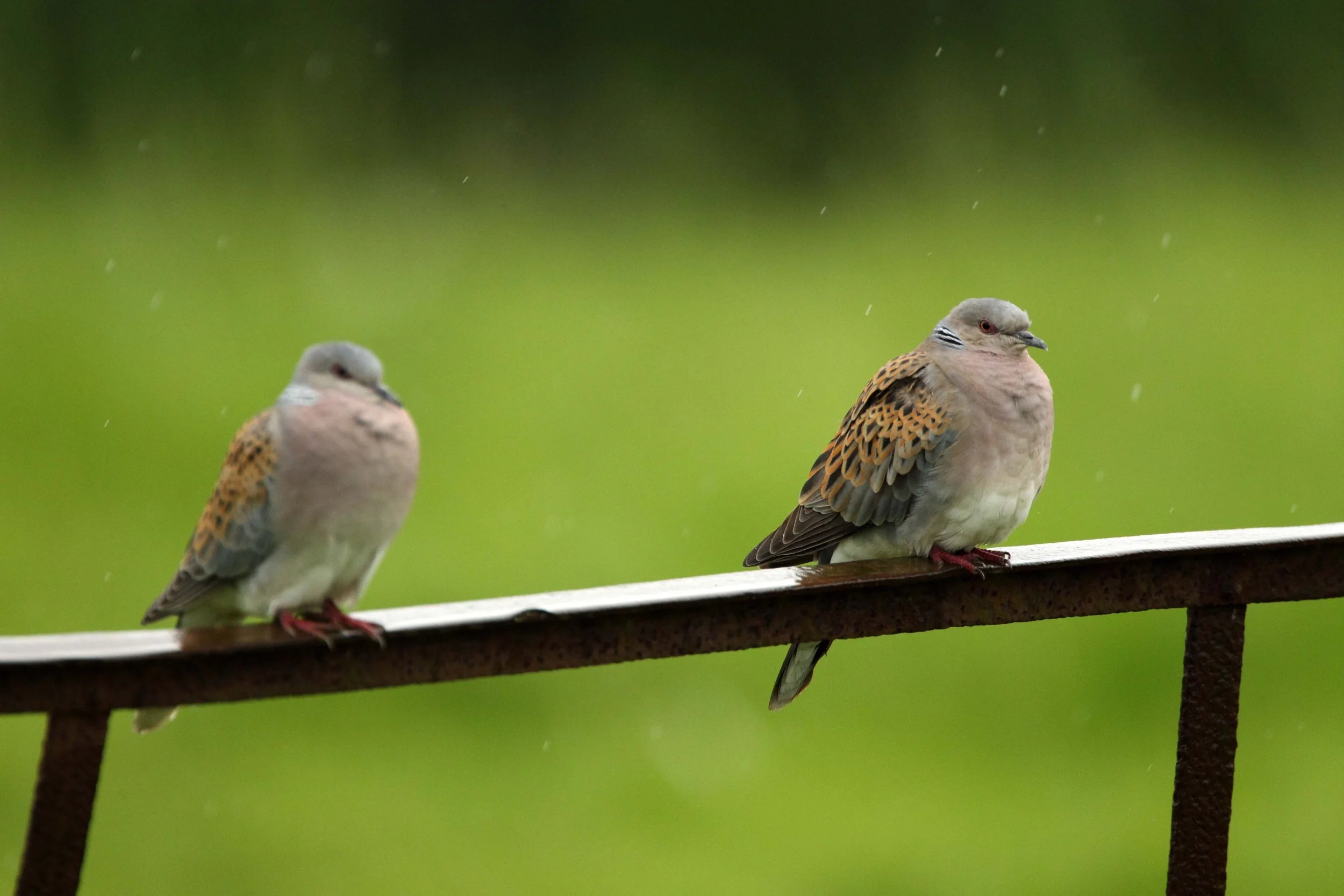
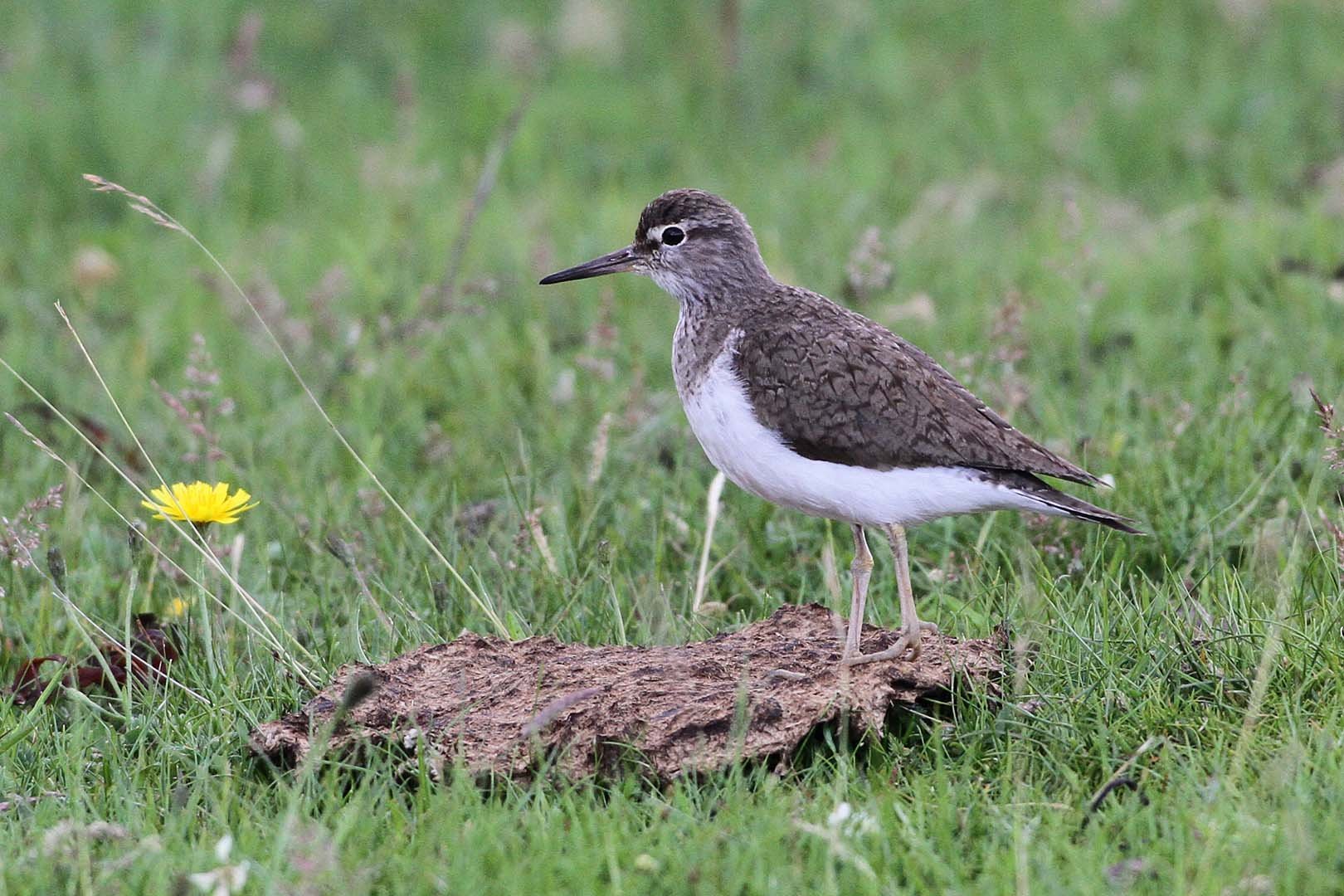
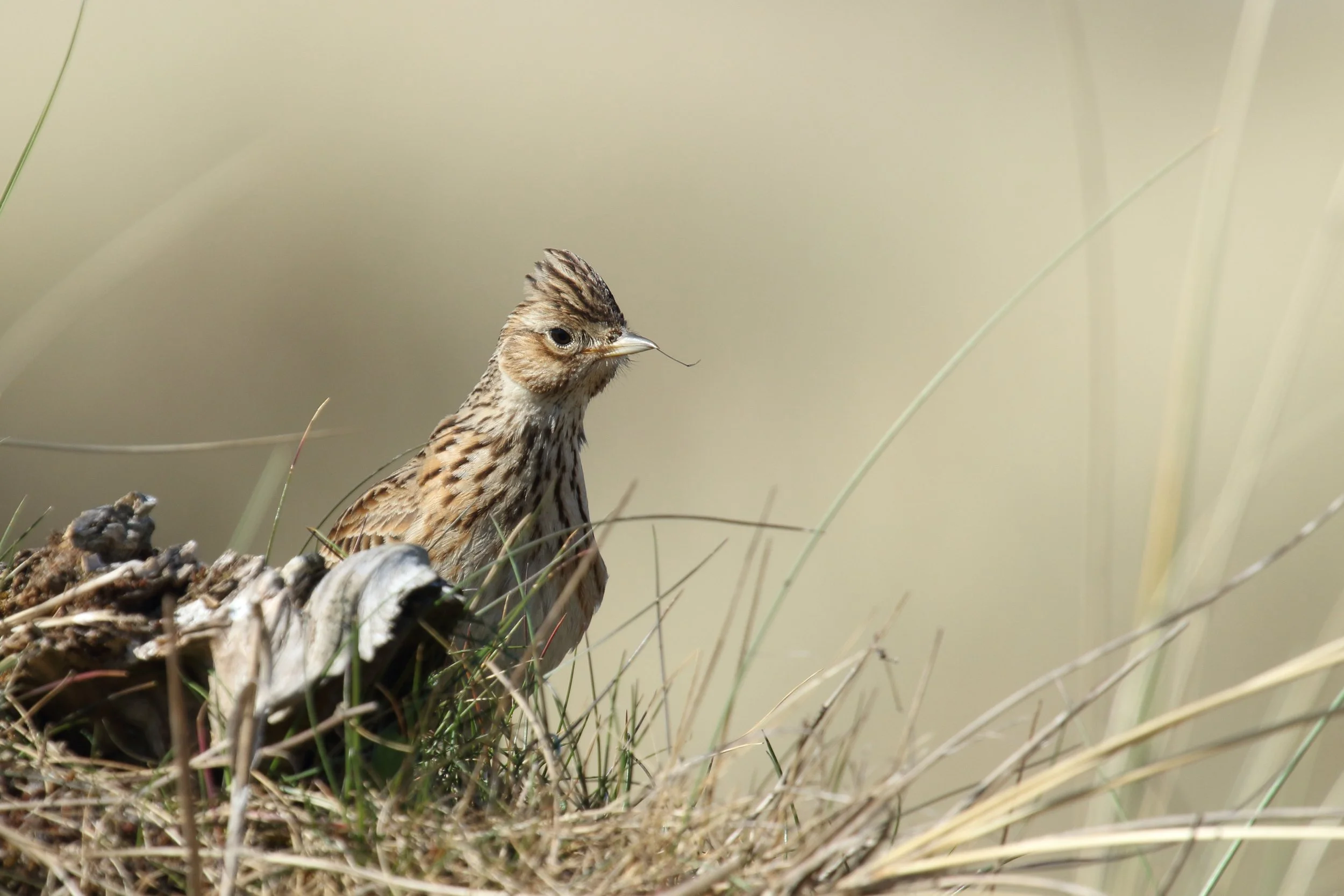
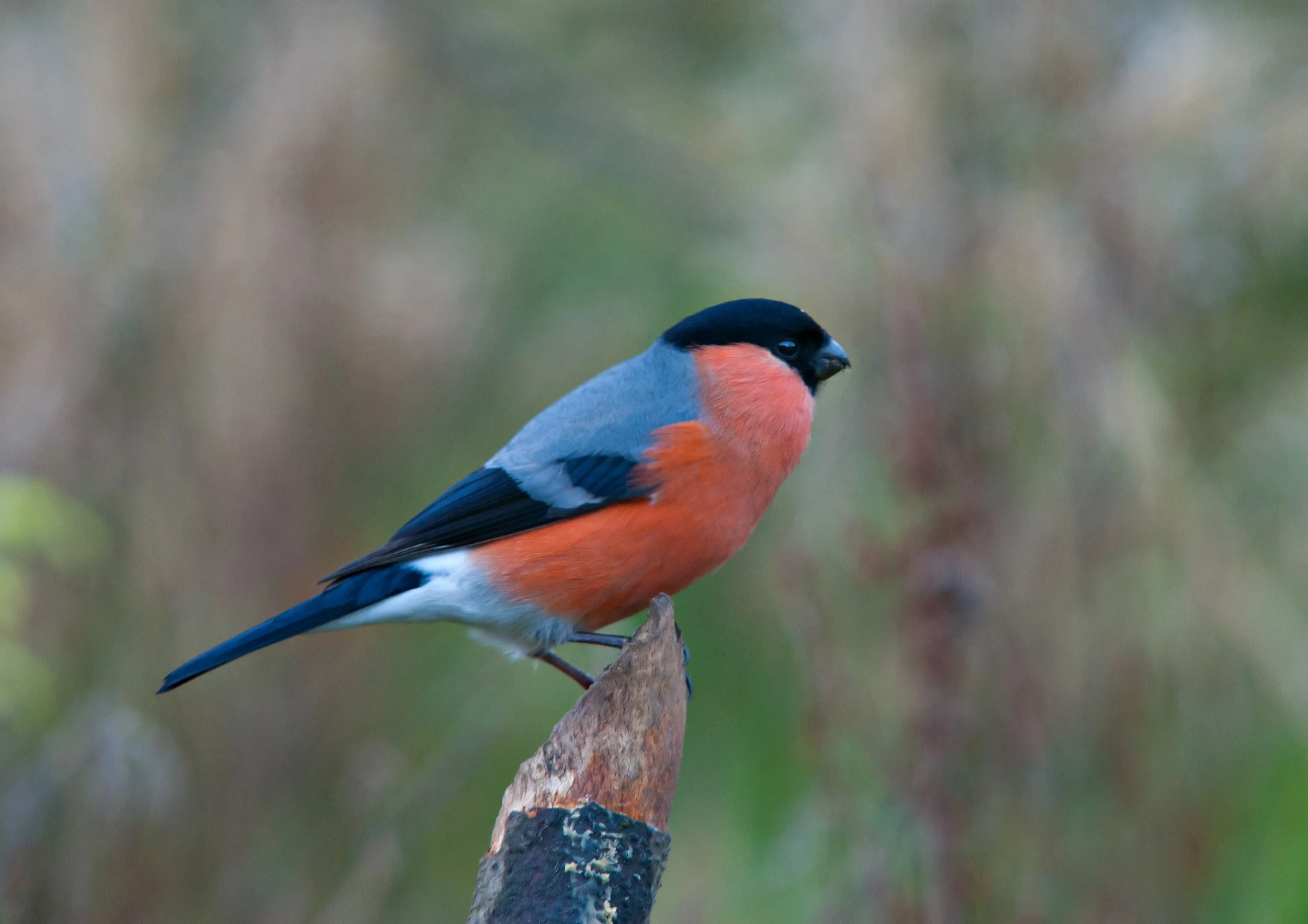

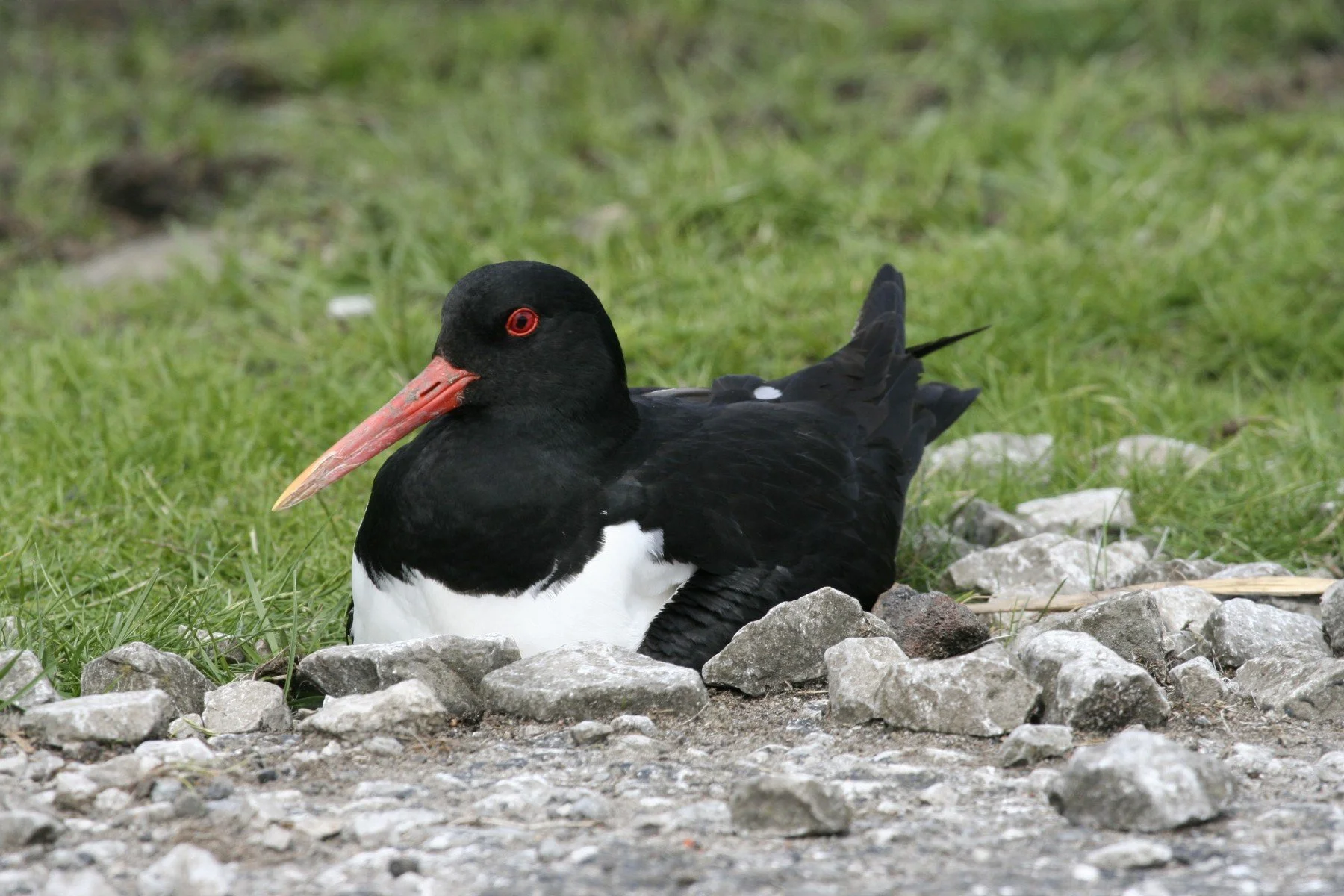
Images: Turtle Dove/ Common Sandpiper/Skylark/Bullfinch/Linnet/Oystercatcher
How do we measure the benefits of passive monitoring?
The major advantage of passive monitoring comes from its low level of human input. Ecologists are busy people, and only a lucky few have the time to sit silently in a bush for weeks at a time listening to birds- even though most of us would like to! Passive monitoring allows us to keep tabs on many sites simultaneously, providing valuable information that we would never be able to capture otherwise. It creates large quantities of data for the local Biological Records Centre, and it also helps us to strategically focus the more time-intensive in-person surveys on the highest priority sites.
Wild Whittington was the perfect candidate for the pilot study because we carried out extensive breeding bird surveys there this year as part of our ongoing monitoring of the site. The records collected in the field by our expert ornithologists provide us with the perfect comparison data with which to judge the value of the pilot study, removing the guesswork that would come with trialling the method at an unknown site. Of course, it is important to keep in mind that passive recorders do have their downsides, and can never replace an experienced ecologist. From passively collected data we can only really know for sure which bird species are present, where they call most frequently and how much noise they are making. We need experienced birders on the ground to reveal the more detailed information; which species are using the site for nesting, for example, or how many individuals are likely to rely on the site. A combination of both active and passive monitoring creates a more complete picture of bird activity than either method alone, resulting in more informed site management decisions, more efficient use of resources, and ultimately, more effective support for our declining bird species.
How can we help you?
With both active and passive monitoring methods in our toolbelt, we are able to collect a full spectrum of ornithological data from broad overviews of a site to highly detailed breeding bird studies. If you are interested in discovering the birds that rely on your site and supporting our threatened native species, don’t hesitate to get in touch with us!