
Farming and Nature for the Next Generation at Broomfield Hall
Derby College Group (DCG) have been working with our team to understand how they can change their land management to support more biodiversity, and support future farmers and land managers to get the most out of their role as stewards of the land.
Why is nature important to Broomfield Hall?
As one of Derbyshire’s largest colleges for land management education, Broomfield is uniquely placed to influence the next generation of farmers and land managers. In a fast-paced, increasingly digital age, when people and nature are increasingly separate it has never been more important for us recognise the crucial role that farming has in tackling climate change and reversing biodiversity loss, and the importance of nature for our own mental and physical health.
We share the belief that farming and nature can, and should, work together so that both people and nature can thrive, ensuring a healthier environment, prosperous rural communities and high-quality food production.
“Nature isn’t an add‑on to what we teach at Broomfield, it’s fundamental. Our students are learning that good land management, food production and environmental responsibility all go hand in hand, and that understanding nature is essential to the future of farming”
- Paul Foskett, Teacher of Countryside & Arboriculture at Broomfield Hall
Wild Solutions Advice
In 2024, DCG reached out to us to undertake a survey to understand Broomfield Hall’s current biodiversity value and advise on changes in management to support wildlife.
Over the summer, we mapped the habitats on site and assessed how current management affects the biodiversity value of the habitats. During this survey we found several areas of ancient woodland and, in the mossy lawns around the old hall, rare species of waxcaps (a type of mushroom) including the snowy waxcap, spangle waxcap and, rarest of all, the Citrine waxcap Hygrocybe citrinovirens. Waxcaps are often found in grasslands that haven’t been agriculturally ‘improved’ so can be a sign of good soil health, so this was a particularly important find and having rarer habitats at the college gives students the chance to learn how to manage them. Broomfield Hall also has other common habitats valuable to wildlife including hedgerows, mature trees and ponds. These help to create a more connected landscape for wildlife, allowing species to move around more easily, particularly important in response to climate change.
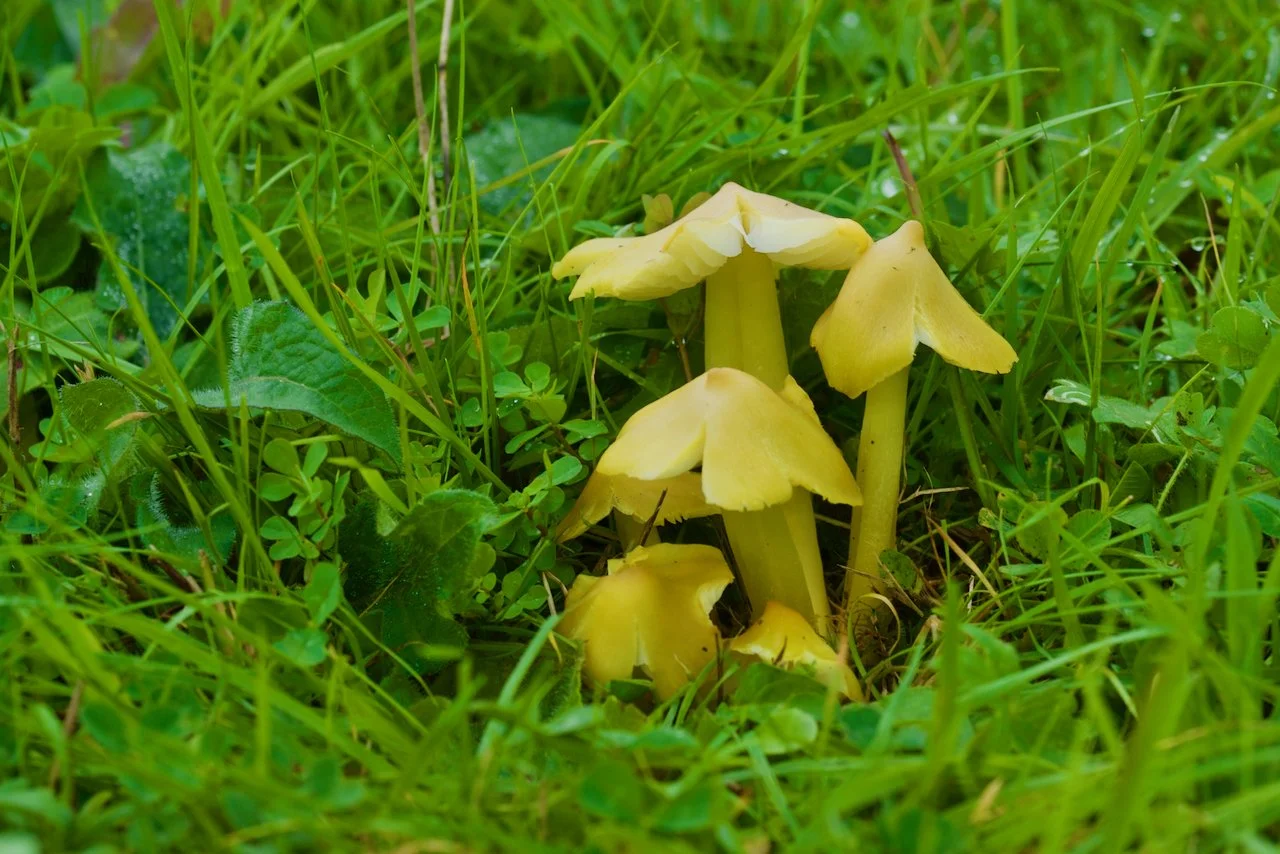
Citrine waxcap Hygrocybe citrinovirens © Lucia Chmurova
Using our results, we made proposals to enhance Broomfield’s nature value whilst supporting productivity, day-to-day practicalities of farm work and teaching prioritise for the college. The aim was to be ambitious and forward-thinking to showcase what is possible, giving students the confidence to innovate and think outside the box when it comes to integrating nature and farming.
How is Broomfield changing?
A key recommendation is to increase tree cover into estate to benefit both farming and nature – a practice known as ‘agroforestry’. In some fields, trees and shrubs will be planted in strips (known as alley planting), with livestock grazing in between. Where mature trees are already present, young trees will be planted so that there are multiple generations, with younger trees to take the place of the older as they age. This will eventually result in a system of grazing known as ‘open wood pasture’ (which has high wildlife value) and would also be a nod to the estate’s history when the fields to the south of the hall were parkland.
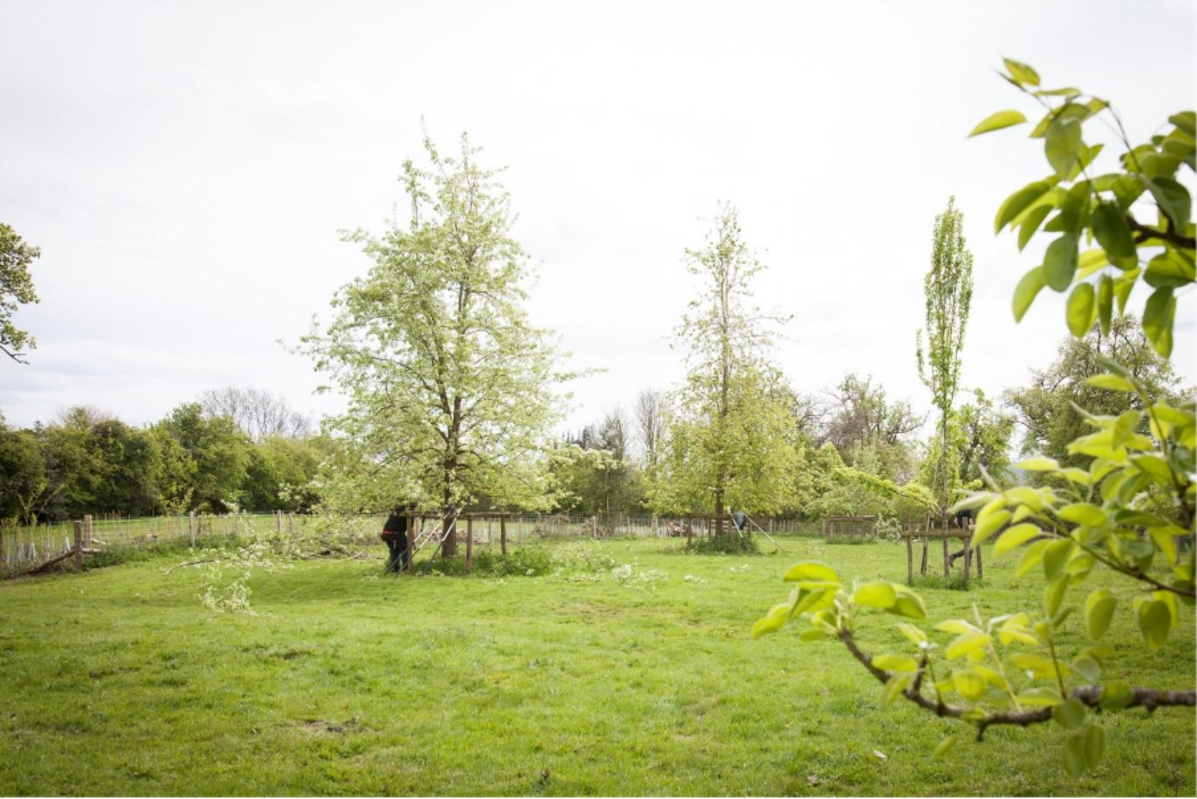
Integrating a new generation of trees within fields Image © Fergus Coyle
Trees provide shade, shelter and food for livestock, and habitat for birds, pollinators, bats and amphibians. Some, such as willow, not only provide a more varied diet for livestock but have known medicinal benefits, and the additional shelter improves lamb and calf survival and allows animals to stay outside for more of the year. More trees in the landscape also store carbon and can improve soil drainage and help reduce flooding. They also give farm business different options for income through woodland crops like wood fuel, fruit and nuts.
“Being able to demonstrate different farming systems in a real, working environment gives our students confidence to think critically and adapt. They can see first‑hand that productive farming and nature recovery can work together in practice, not just in theory .“
Jon Collins, Vice-Principal Broomfield Hall
There are also plans to create a woodland management regime that will improve their biodiversity and give students practical skills in forestry. The UK is one of the world’s largest importers of timber, and teaching these skills to young people will help diversify rural businesses and contribute to the economy, all while improving habitat for wildlife.
Finally, Broomfield are moving to a no-till system of arable. This minimises soil erosion, improves soil health and keeps more moisture in the soil, increasing farming resilience in times of drought, which will be all the more important in the face of a changing climate.
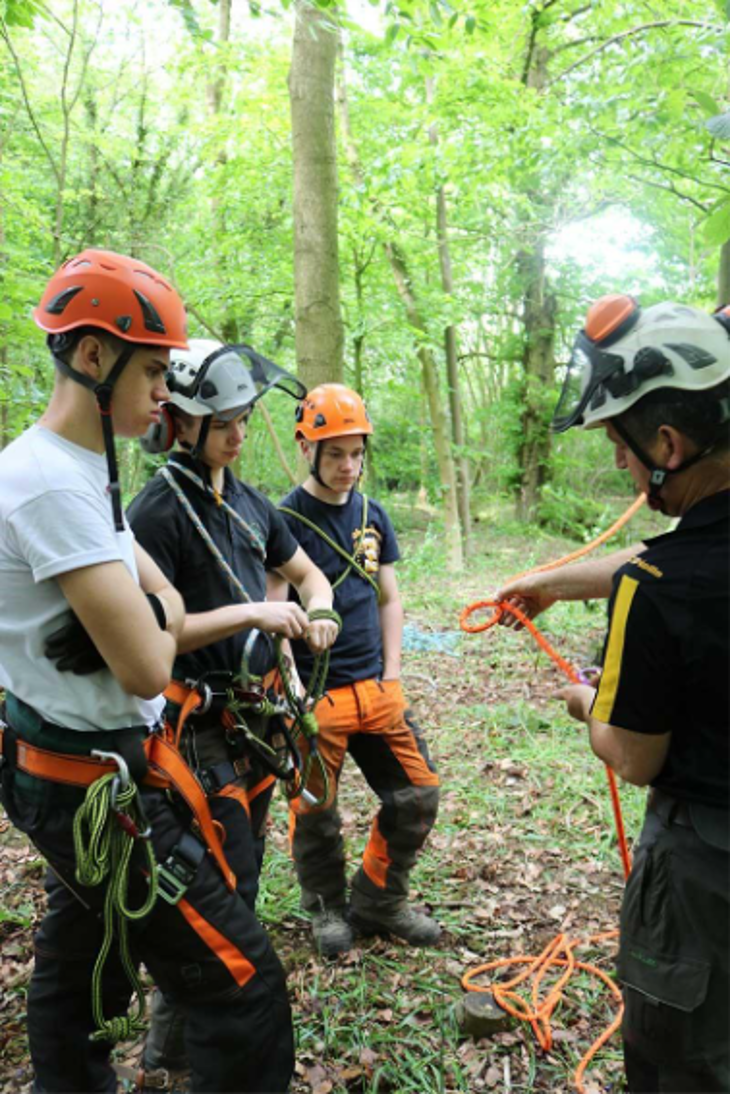
Broomfield students ‘learning the ropes’ of tree management.
What next?
We will continue to work closely together to explore new ways to integrate new habitat with everyday operations at Broomfield. In future we will be able to repeat the surveys we have done to compare the habitats and plants present before and after the changes in management, helping us to monitor changes in biodiversity value over time.
“Working with Wild Solutions at Derbyshire Wildlife Trust has helped us turn ambition into action. Their expertise has supported us to make informed, practical changes that benefit wildlife while strengthening our role as educators shaping the next generation of land managers.”
Mollie Cox, Environmental & Sustainability Officer at Derby College Group
We will be doing surveys of DCG’s other sites – the Roundhouse and Joseph Wright College in Derby and Ilkeston College – to explore what more can be done for nature in these very different, much more urban sites.